
Data Center Special Hazard Solutions
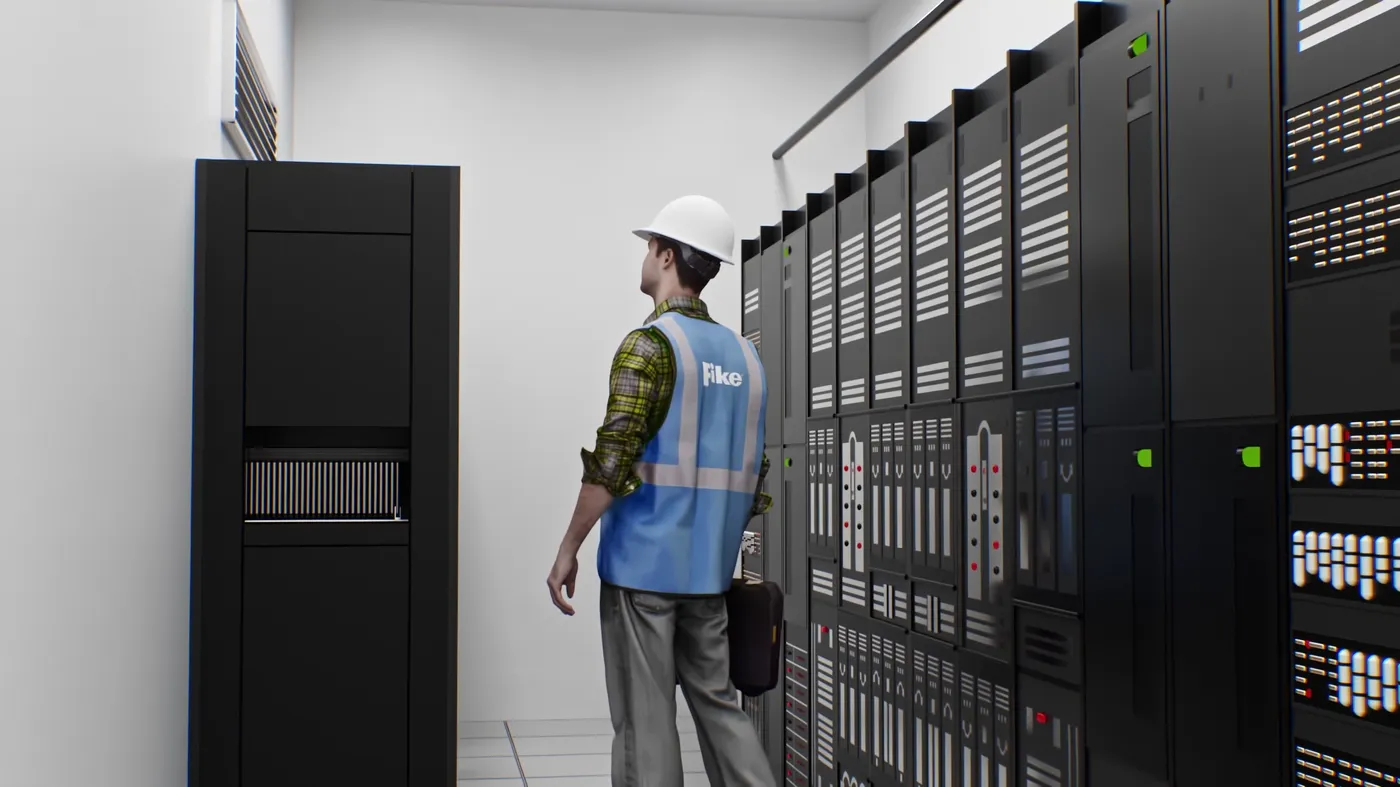
Data centers possess extremely unique fire protection and industrial safety challenges that require a team with the necessary experience, expertise, facilities and supply chain to strategically grow alongside this ever-evolving industry.
Those looking for scalability, reliability and efficiency need to look no further than Fike ﹘ the only industrial safety organization in the world with the ability to offer the following comprehensive solutions.
Why Fike for Complete Data Center Safety Solutions?
Fike is uniquely positioned to lead all life safety requirements by protecting data centers:
- Business continuity by eliminating fire-related disruptions that may cause unplanned downtime
- High value equipment including servers, GPUs, power infrastructure and more
- Compliance with insurance requirements, AHJ demands and regulatory standards
- Bottom line by recommending, designing and sourcing the most cost-effective solutions
Service Offerings & Capabilities

LAYERS OF PROTECTION
Many of today's data centers use a "layers of protection" strategy, as various detection and suppression methods are called upon to respond to certain situations and to ensure the sprinkler system does not activate.
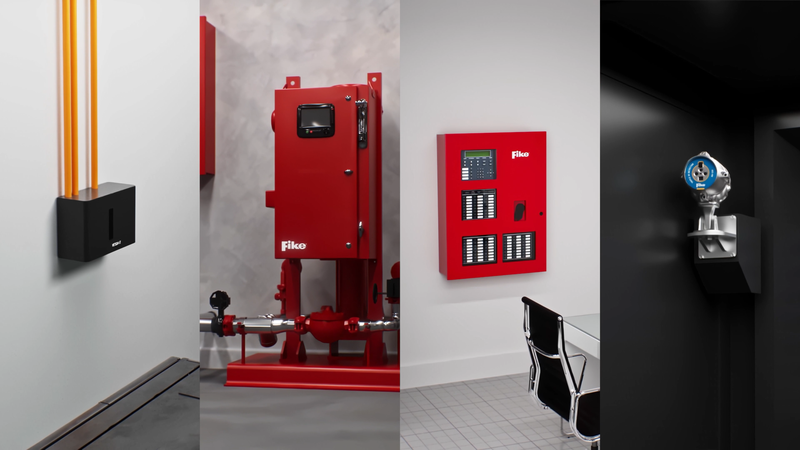
For example, a small electrical fire would not justify a full sprinkler discharge because of the resulting water damage, cleanup and downtime. With the layers of protection strategy, an early warning detection system will instead identify the incipient fire, and power may be shut down and other appropriate types of mitigation can be used, such as a portable extinguisher.
If the fire were instead obscured and couldn't be reached by an extinguisher, another layer of protection may respond such as a water mist or inert gas suppression system with minimum cleanup and downtime. The sprinklers will then remain on standby to serve as the last line of defense.
Fike's layered protection strategy is found in the following recommendations within each component of today's data centers:
1. DATA HALLS
Advancements in AI processing are changing how data center stakeholders think about fire protection ﹘ not necessarily because the probability of fire has increased but rather because the consequences have become much more severe. The sooner a hazard is identified, the faster the response and greater probability of avoiding damage and downtime.
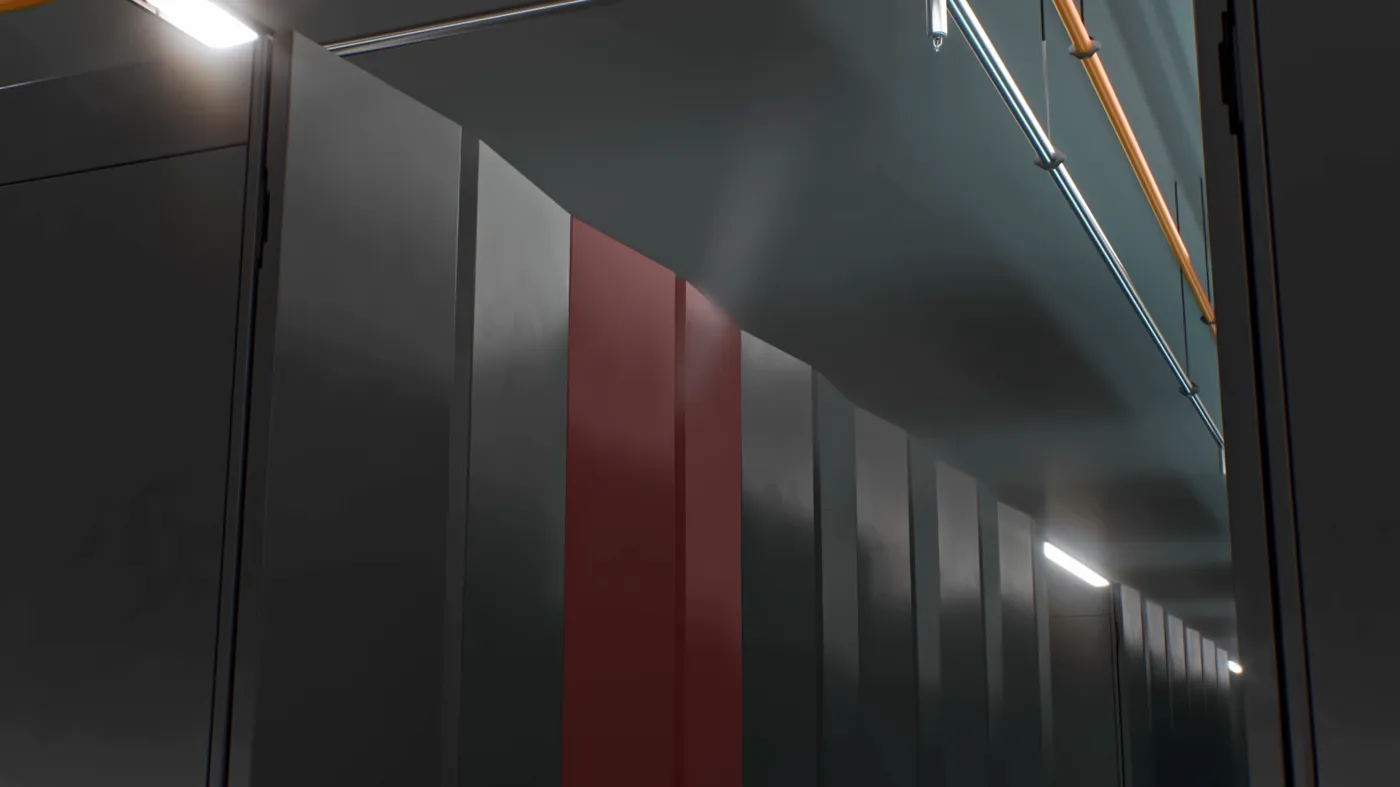
Water Mist Systems
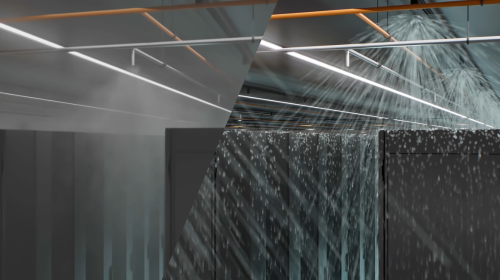
In recent years, water mist systems have been commonly used as an additional layer of protection to supplement sprinkler systems. A water mist system provides targeted suppression, heat absorption, 3D coverage and quick cleanup, while the sprinkler system remains on standby.
Additional benefits of water mist include small droplet size that makes these systems much safer for electronics, reduces pooling effects and greatly reduces downtime.
The water mist system may also extend into other areas of the data center such as the UPS power modules and diesel generators.
Recommended Layers of Protection for Data Halls

Fike DuraQuench® Pro
Water mist system controls battery fires and cools the environment; pipe network often extends underground from the data hall into each power module unit.

Addressable Fire Panels
Both Fike Cybercat and Fike FCP meet the addressable demands of the data hall and greater data center, complete with voice evacuation and networks with Fike releasing panels.

Xtralis Air Sampling
VESDA-E family provides comprehensive and addressable smoke particle detection of any electrical or battery fire that may occur within a power module.
Fiber Optic Linear Heat
Fed through server aisles to measure temperatures in real time and facilitate quick response; may detect set temperature thresholds, rate of rise or difference to zone average.
2. POWER MODULES (UPS)
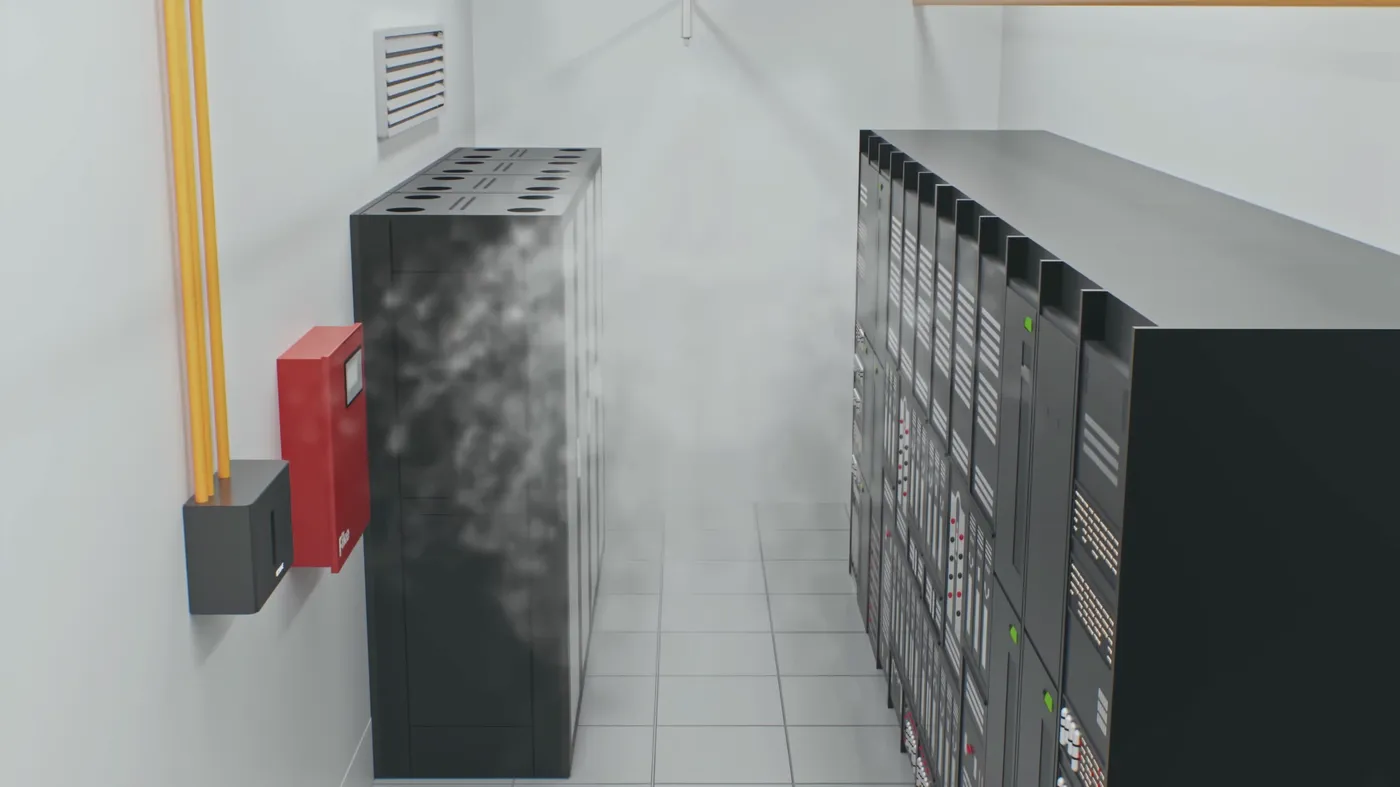
In an effort to expedite today’s data center construction, the uninterruptable power supply (UPS) is often built into enclosures called “power modules” located externally from the data hall. The electrical infrastructure and lithium batteries converge here in a relatively tight space, which presents several potential hazards that must be addressed.
Thermal Runaway & Battery Fires
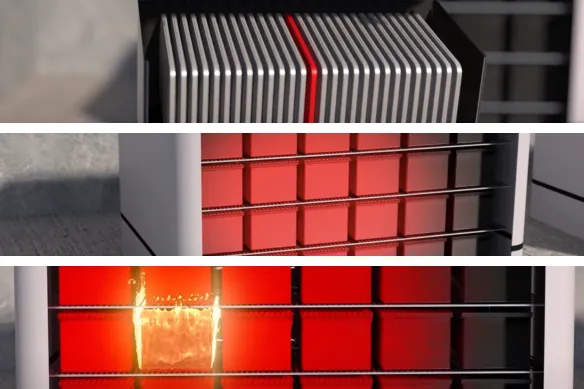
The most impactful potential hazard is a lithium battery fire created from a chemical reaction known as “thermal runaway” that suddenly produces a very dangerous and unstoppable combination of heat and combustible gases.
Without intervention, the uncontrolled excessive heat will cause nearby cells and modules to also go into thermal runaway, compounding the threat and potentially resulting in a devastating fire and even a deflagration.
“When we look at lithium batteries and thermal runaway, a lot of data exists that proves it’s not actually the batteries that start the problems, but rather it’s the subsystems,” said Mark Kendall, Director of the Fike Solutions Group (UK & Europe). It’s the HVAC, the switchgear or the inverters – these are often the cause that trigger the batteries into thermal runaway.”
Because dozens of power modules may be required for just one data center, a scalable layered protection strategy is required to avoid the worst-case scenario.
Recommended Layers of Protection for Power Modules

Li-Ion Tamer or Infrasensing
Identifies the earliest stage of thermal runaway by the electrolyte solvent vapors from the failing lithium battery, allowing for quick suppression and alarms.
Xtralis Air Sampling
VESDA-E family provides comprehensive and addressable smoke particle detection of any electrical or battery fire that may occur within a power module.
Fike DuraQuench® Pro
Water mist system controls battery fires and cools the environment; pipe network often extends underground from the data hall into each power module unit.

SF 1230 Fire Protection Fluid
A one-to-one drop-in Novec 1230 replacement used to suppress electrical fires; offers highest purity standards, low GWP of less than one, and fast lead times.
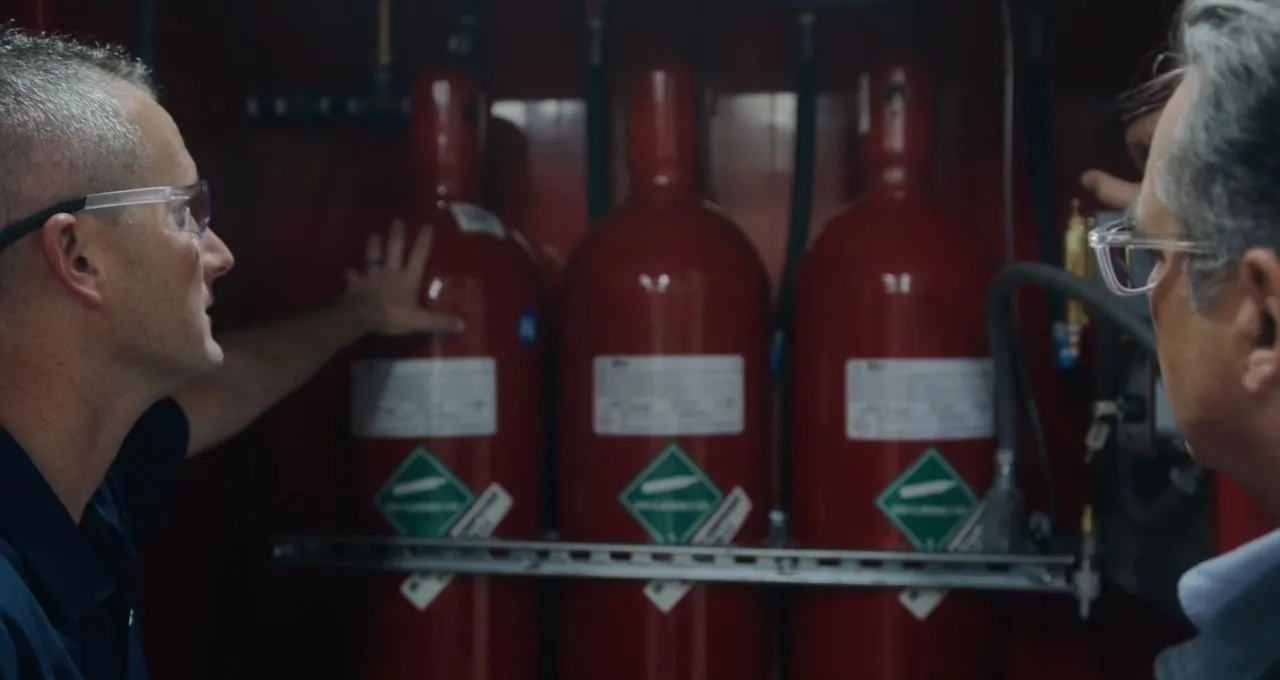
Fike Inert Gas
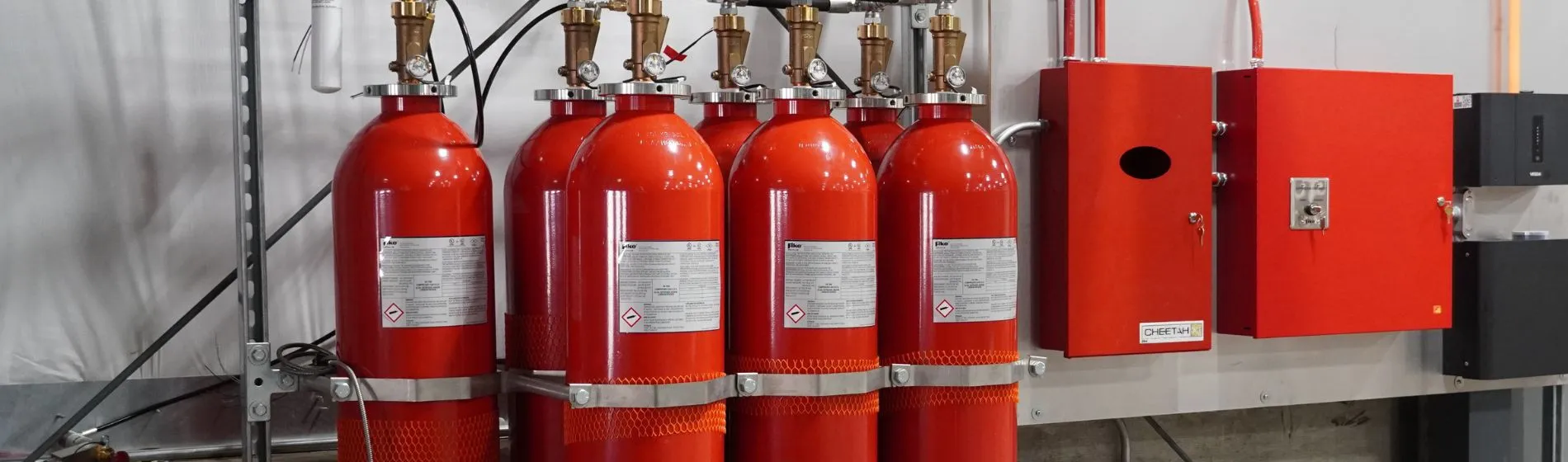
Reduces oxygen levels unsustainable for fires but safe for people; Fike Slide Valve maximizes system reliability while minimizing time of installation and service.
Fike Blue®
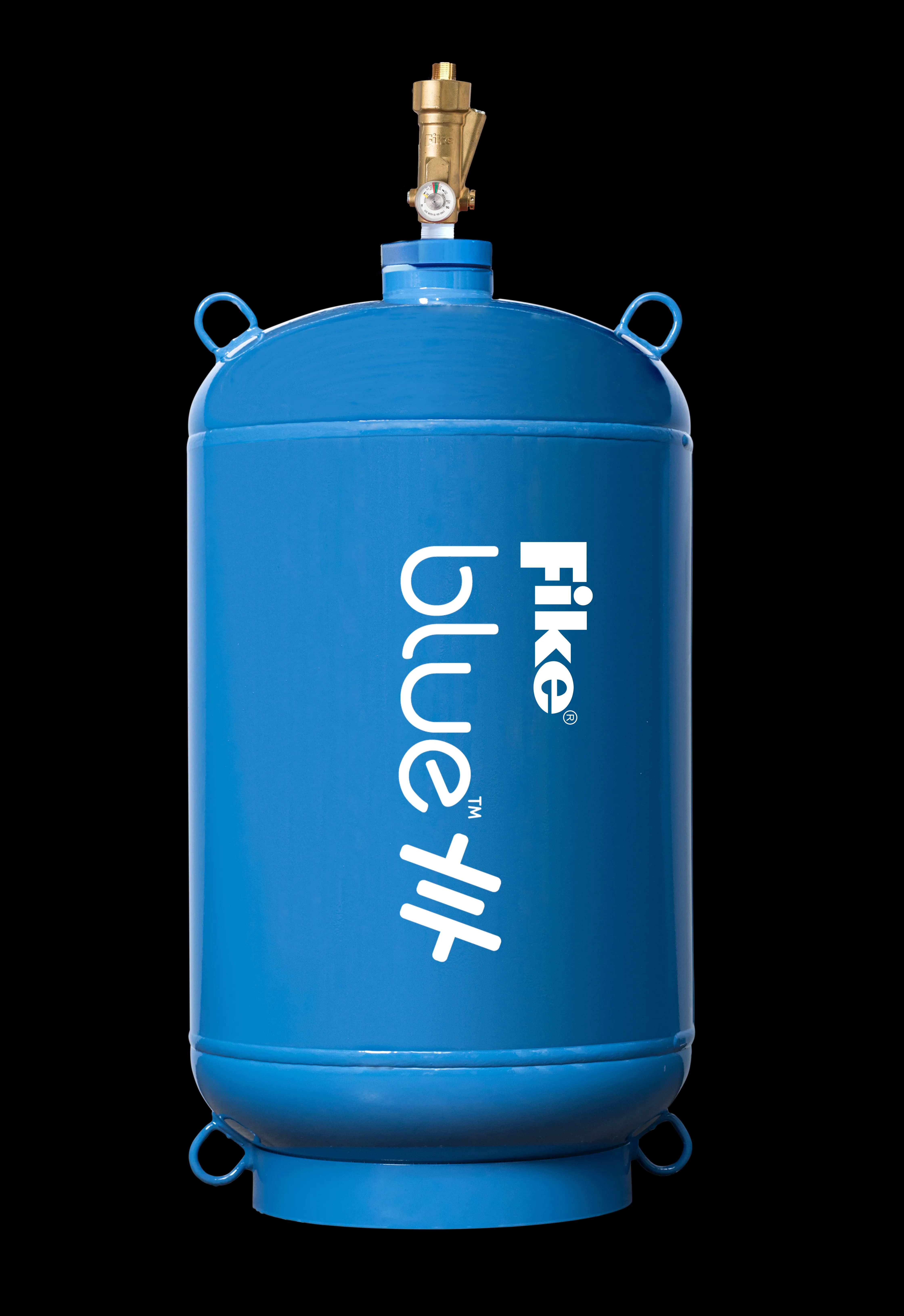
The only proven solution to stop the propagating thermal runaway reaction and remove the threat of reignition. Fike Blue flows through the affected battery modules and absorbs the heat to ensure the cascading event is stopped.
Power Module & Lithium Battery Fire Consultancy
Fike is one of the world’s leaders in lithium battery fire consultancy, testing and system design, and can perform the following studies on power modules that are often requested by Authorities Having Jurisdiction (AHJ) and engineering and architecture firms:
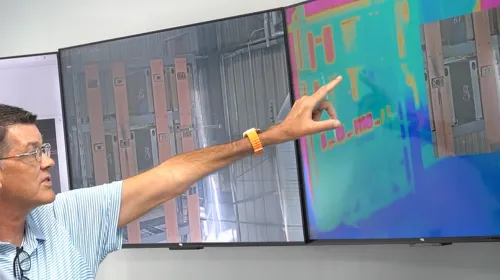
HAZARD MITIGATION ANALYSIS
Identifies potential failure modes, assess their consequences, and verify that the design includes adequate safeguards to ensure the reliability and survivability during a thermal runaway propagation or single failure event.
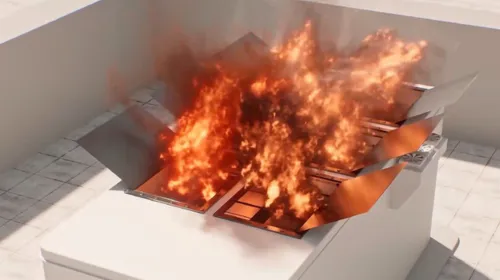
DEFLAGRATION HAZARD STUDY
Analyzes lower flammability limit (LFL) and variables such as pockets of gas and air mixture that may result in partial volume deflagration; calculates data against existing documentation to determine whether enclosure can withstand deflagration pressure.
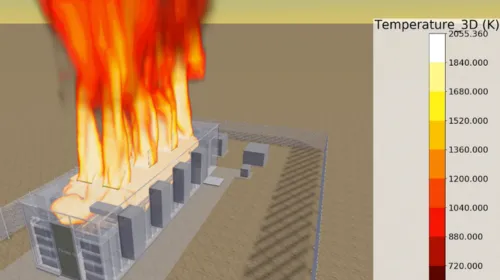
COMPUTATIONAL FLUID DYNAMICS
Creates a simulation to assess the flammable gas dispersion and deflagration effects on the structural design of the PPM enclosure; maximum pressure on the interior of the PPM enclosure is compared to the pressure resistance of the enclosure.
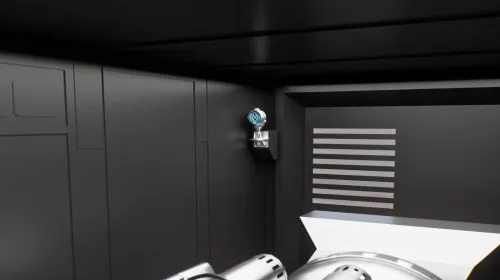
3. DIESEL GENERATORS
Data centers often include diesel generators to provide efficient and reliable backup power. Diesel generators face several potential fire hazards, including diesel fuel or lubricating oil which could leak and make contact with a nearby hot surface, and electrical faults and mechanical failures may also produce ignition.
Recommended Protection Systems for Diesel Generators
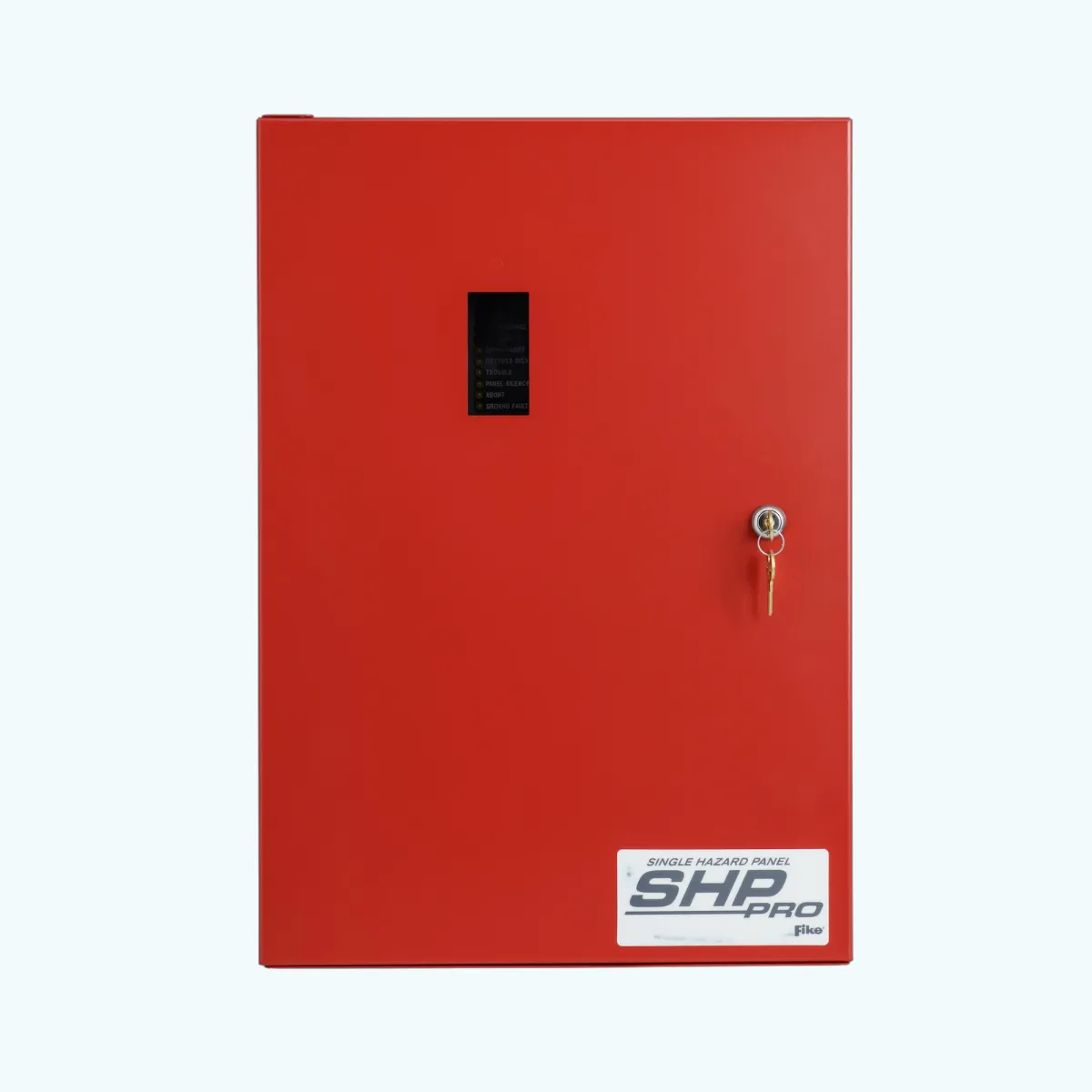
Fike SHP-PRO
Conventional and cost-effective releasing panel to control water mist and chemical agent suppression systems; networked with addressable panel in data hall.
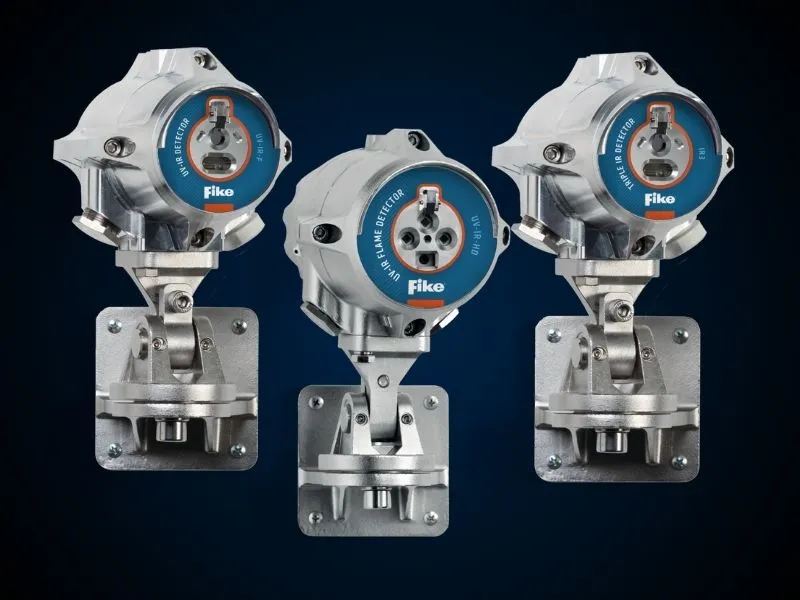
Flame Detectors
Identifies hydrocarbon and hydrogen fires up to 260 ft away; multi-spectrum infrared and UV/IR technologies provide immunity to false alarms.
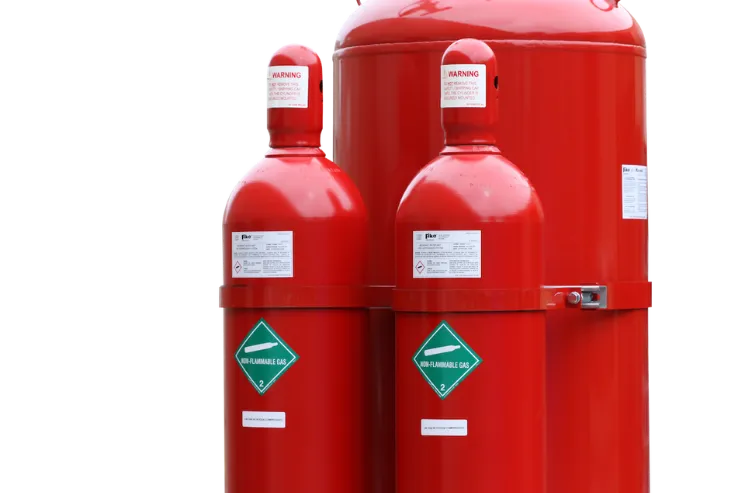
Watermist
Fike DuraQuench nozzles may extend from data hall to diesel generator, or Fike Micromist® may provide self-contained water mist solutions.
4. GAS ENGINES & EXHAUST
On-site gas engines are another method of supplementing the power demands of data centers, but they too come with their own risks which must be addressed. During start-up and shutdown, unburned fuel can be emitted into the exhaust and be met with sparks from the engine, potentially resulting in a gas explosion which can propagate into the exhaust system.
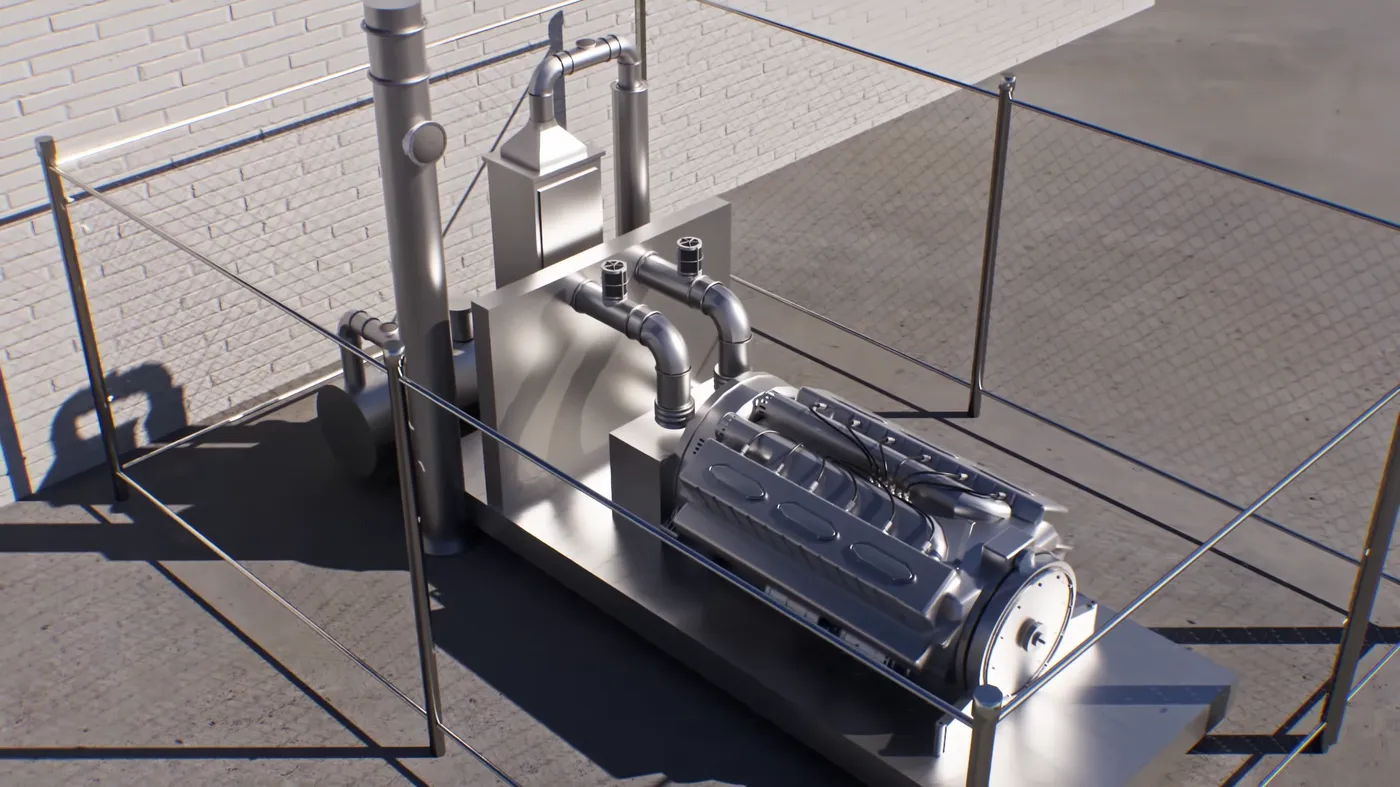
Recommended Protection Solutions for Gas Engines
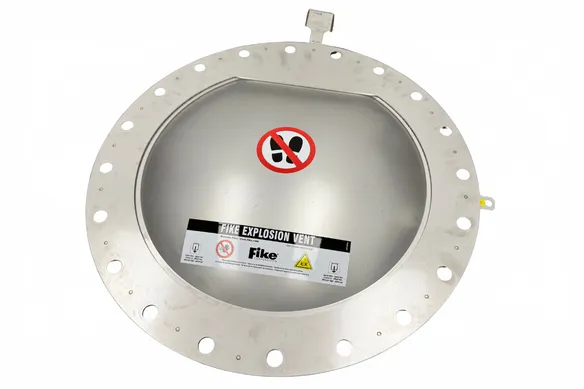
Fike EXV-GEP
Explosion vent panel installed strategically to safely relieve pressure and flames; resistant to process temperatures up to 600° and to vibrations and pressure fluctuations.

Fike GEX
Flameless venting device installed over EXV-GEP explosion vents to protect possible nearby operators and the enclosure from blast waves, heat and flame effects.